Morning Briefing — Sunday 15 March 2026
Synoptic overview
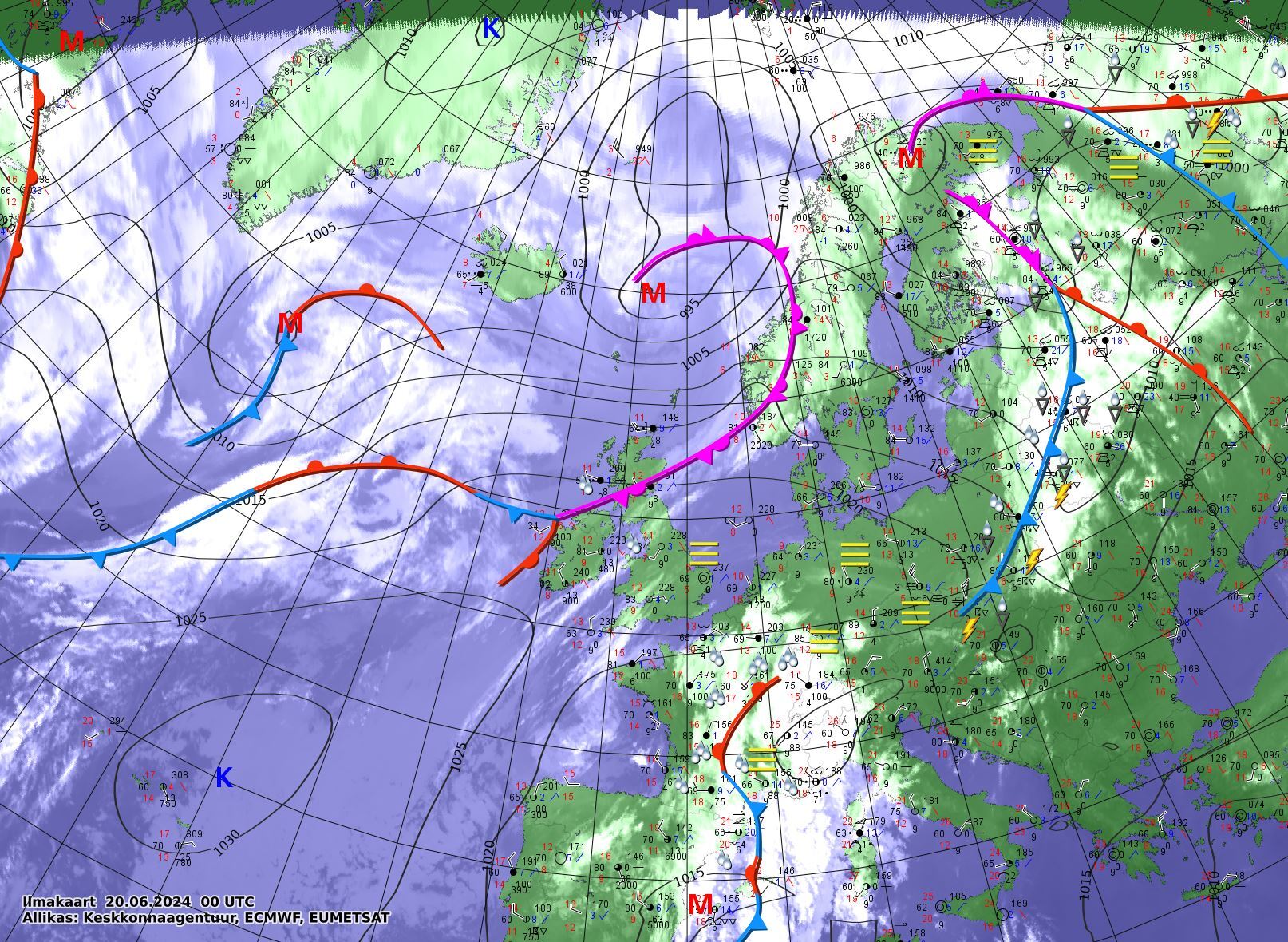
Source: Estonian Environment Agency


Charts: lennuilm.ee (Estonian Aviation Weather)
Sounding — Tallinn-Harku 00Z
Source: University of Wyoming, station 26038
Airmass classification (2026-03-13)
Source: SSC v3.0 (Kent State University), station TLL
Current conditions — Tallinn-Harku
Source: Ilmateenistus (Estonian Weather Service)
Kuusiku XC forecast
Source: Open-Meteo forecast API (59.0°N, 24.8°E). Thresholds calibrated on 53 top-100 Rapla XC flights.
Metric reference
| Lapse rate | Temperature decrease per km altitude. >6 °C/km = active thermals; >9.8 = superadiabatic (turbulent). |
| Thermal ceiling | Height where lapse drops below moist adiabatic — approximate top of usable lift. |
| Inversion | Layer where temperature increases with height, blocking thermals. Common overnight; often breaks by midday. |
| Lifted Index (LI) | Stability of a lifted surface parcel at 500 hPa. Negative = unstable; < −3 = strong thermals; < −6 = storm risk. |
| K-index | Thunderstorm potential from temperature and humidity profile. >25 = showers likely; >35 = widespread storms. |
| CAPE | Convective Available Potential Energy (J/kg). Higher = stronger updrafts. >1500 = overdevelopment risk. Not computed by Wyoming for Tallinn-Harku — shown in Kuusiku section from forecast model. |
| CIN | Convective Inhibition (J/kg). Energy barrier thermals must overcome. > −50 = weak cap (easy trigger); < −200 = strong cap. |
| Thermal Index (TI) | Forecast noon surface temp minus 850 hPa sounding temp. Positive = thermals likely; higher = stronger. |
| BLH | Boundary Layer Height — mixing depth where thermals operate. >1400 m for good XC; >2000 m for excellent. |
00Z sounding reflects pre-dawn atmosphere (~23:30 UTC previous day). Surface inversions typically break by mid-morning. Kuusiku forecast uses 13 UTC (16:00 EEST / 15:00 EET) for peak thermal metrics — this hour was calibrated against the top-100 Rapla XC flight dates (2018–2025).
Disclaimer: Content generated using AI under guidance of an amateur paraglider pilot. Always check actual weather conditions before flying. No responsibility is assumed for decisions made based on this data.
← Dashboard · Opportunities · Trip Planner · Status · Generated 2026-03-15 05:00 UTC